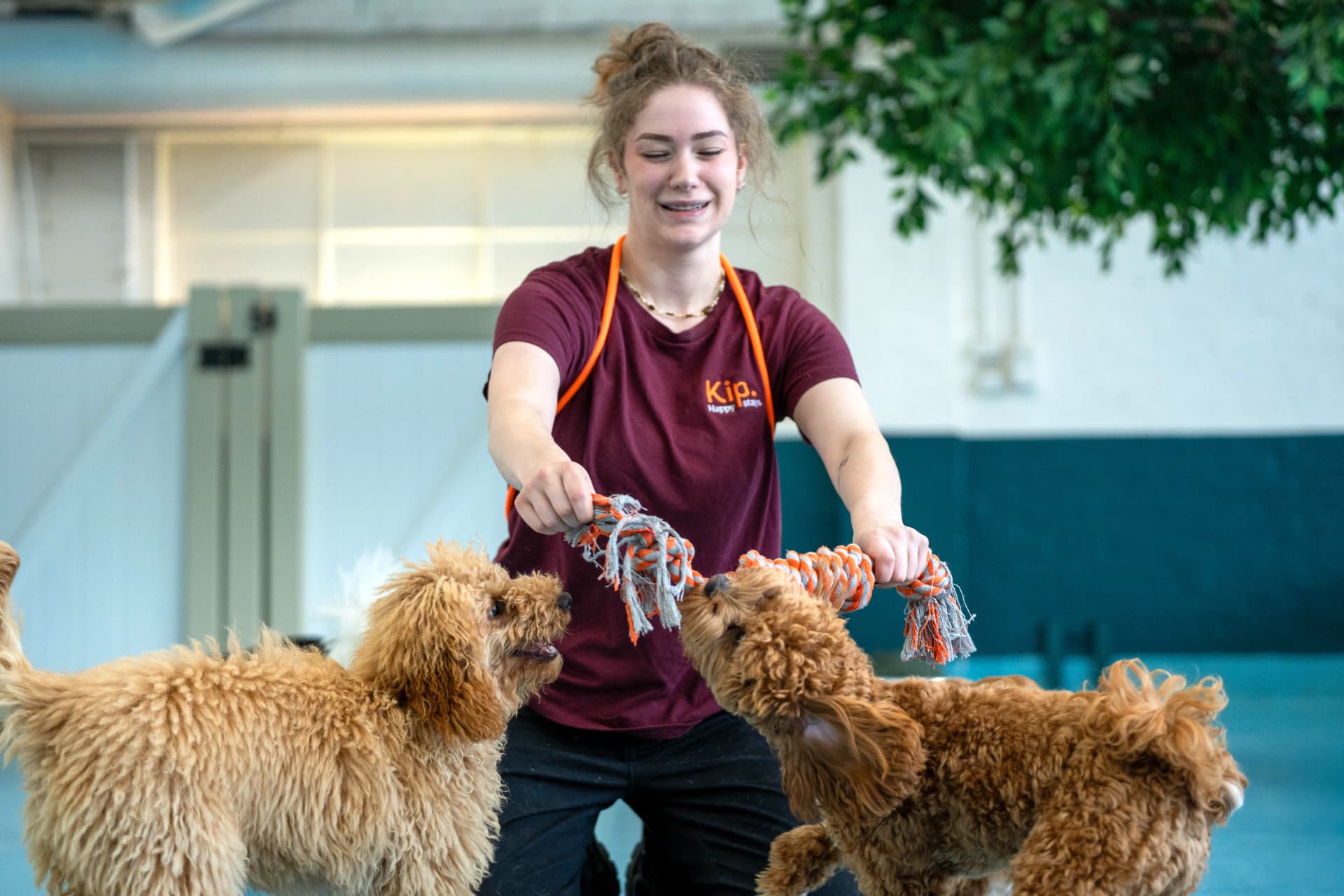
Before your puppy becomes a fully fledged sock thief, sofa sprinter and neighbourhood celebrity, there is an important job to do: introduce them to the world.
Learning how to socialise a puppy is about making those introductions safe, structured and pawsitive. New people, animals, environments, sounds and surfaces all join the sniffari during the influential 3 to 14-week window. At this age, puppies are especially receptive to learning that unfamiliar things can be manageable, enjoyable or even treat-worthy.
Positive experiences during this period can help puppies grow into calmer, more confident and adaptable adult dogs. Limited or frightening early exposure can increase the likelihood of fear, anxiety and reactive behaviour later on. The goal is not to squeeze the entire world into one whirlwind weekend. It’s to introduce it thoughtfully, one tiny adventure at a time, with rewards, breathing room and guidance from fur-st class puppy training.
The 3–14 week window and the vaccination question
Puppies have a short but mighty window for meeting the world. From around 3 to 14 weeks, their brains are especially ready to file new people, places, sounds and experiences under safe, normal and ‘could be carrying snacks’. As that window closes, unfamiliar things are more likely to be approached with caution, making gentle early introductions especially important.
Here is the puppy-parent pickle: this puppy socialisation window is already ticking while vaccinations are still underway. Waiting until the entire vaccination schedule is complete can leave very little of it to work with.
The American Veterinary Society of Animal Behavior recommends beginning dog socialisation before vaccinations are completed, provided it happens in carefully managed settings. Puppy preschool with appropriate health requirements, visits to friends’ homes and time with calm, healthy, fully vaccinated dogs can all bring the world closer without launching your pup into a full germ offensive.
Your vet can help you weigh up local disease risks and decide which outings suit your puppy’s vaccination stage. Early socialisation doesn’t require paws to be pounding every pavement, either. Your puppy can watch passing traffic from your arms, meet new people at home or take a planned car trip while their immune system clocks on.
Off-leash dog parks, unknown dogs and the full paw patrol in areas heavily used by other pups can wait until your vet confirms your puppy is fully protected. For the moment, let your pup meet the world in bite-sized, biscuit-backed doses with safe sniffaris, familiar faces and a vet-approved guest-list.
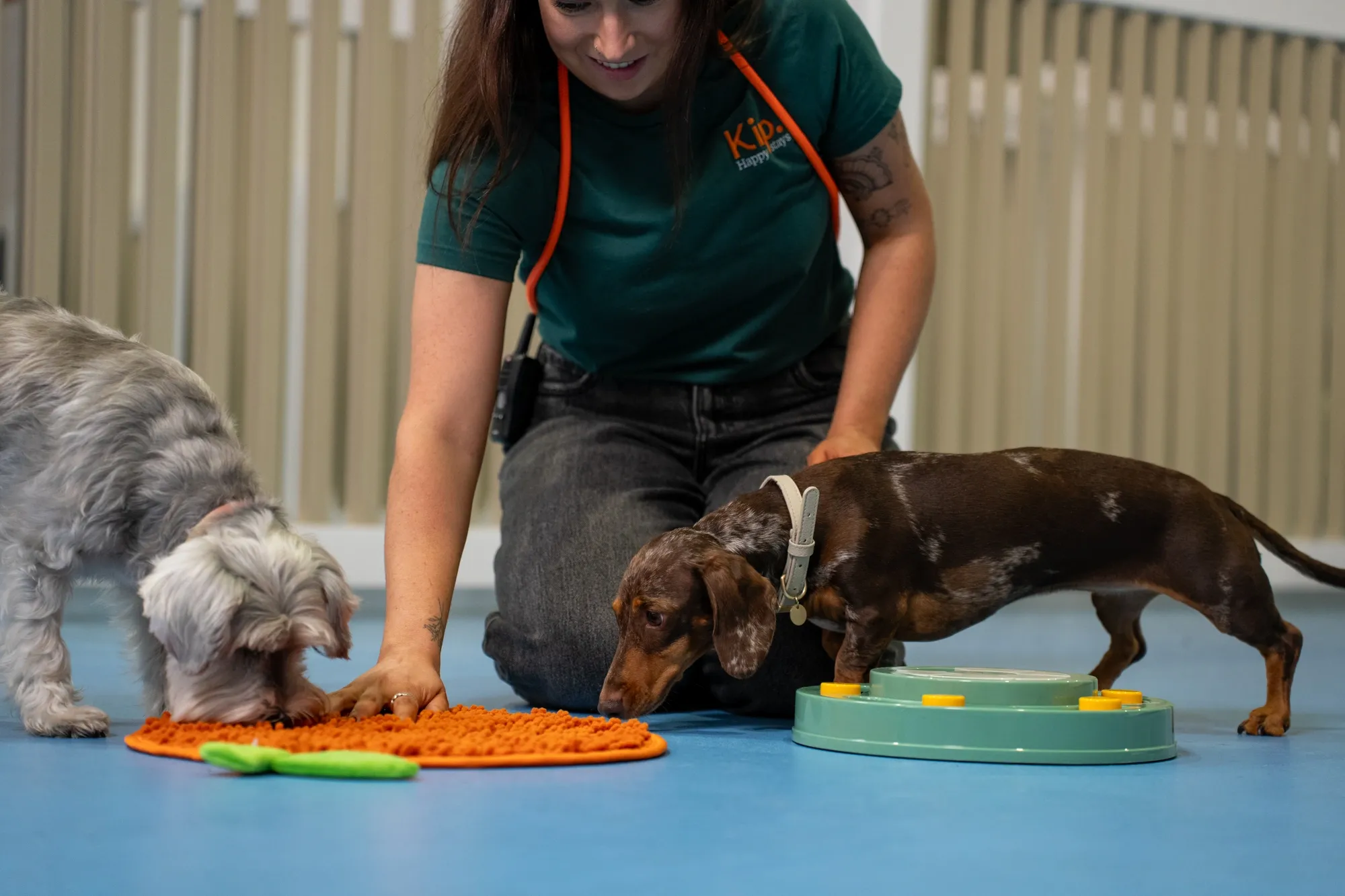
A quick-start socialisation checklist
Use this puppy socialisation checklist as a starting point, then repeat each experience gradually across different days. Keep the introductions short, pawsitive and spread across the week.
| Category | Examples of Social Exposure |
|---|---|
| People | Adults of different ages, supervised children, people wearing hats or uniforms, and people using mobility aids |
| Dogs | Calm, healthy, fully vaccinated adult dogs you know, plus similar-age puppies in a well-managed puppy school |
| Environments | Home, the car, friends’ houses, quiet cafe patios and friendly non-medical visits to the vet |
| Surfaces | Grass, timber, tiles, gravel and metal grates |
| Sounds | Doorbells, vacuum cleaners, traffic, hairdryers and low-volume thunder recordings |
| Handling | Gentle touches around the paws, ears and mouth, plus brushing, collars and harnesses |
Pair each new experience with something your puppy already loves, whether that is food, play or a cuddle from their favourite human. A tucked tail, trembling, hiding or trying to leave is their way of saying the world has gone a little too widescreen. Step back, add more distance and try again more gradually.
How to socialise a puppy comes down to calm curiosity, not compulsory networking. Your puppy can learn plenty by observing another dog from afar, listening to an unfamiliar sound or putting one brave paw onto a new surface. Bring those experiences back across different days, keep the pressure low and wrap things up while they are still relaxed, engaged and treat-ready.
As your pup grows, carefully managed dog daycare may offer new supervised opportunities for puppy socialisation where they can explore, play and spend time around well-matched, vaccinated pup pals.
Book puppy training and puppy daycare at Kip
Ready to turn your tiny chaos coordinator into a confident little citizen? Kip puppy training and puppy daycare is available at participating locations for young puppies, helping them practise useful skills while meeting vaccinated peers in a safe, structured environment.
Our program follows AVSAB puppy socialisation guidance around controlled early socialisation with learning, play and positive firsts carefully woven together. From meeting new furry friends to building everyday manners, each session gives busy little brains something to chew on and helps pet parents keep the good work rolling at home.
Find your nearest Kip and set those tiny paws up for big things.