Dog boarding can be bare-bones practical or a full holiday-mode pawradise. The trick is knowing how to sniff out the difference.
A traditional dog kennel takes an essentials-only approach: a safe place to sleep, meals, toilet breaks and daily care. A modern dog boarding facility adds the bells, whistles and squeaky toys, with individual rooms, temperature-controlled spaces, structured routines, enrichment, supervised play, social time and parent updates throughout the stay.
Sounds simple enough, until the wording gets tangled in the lead. Some excellent facilities still call themselves kennels, while a “hotel” or “pet resort” may be wearing a fancy name tag over a more basic model. That’s why the smartest question is not “kennel or resort?” It’s “what does my dog’s day actually look like?”.
This guide breaks down the fur-real details: design, daily routine, staffing, enrichment, owner updates and cost, so you can choose the kind of stay your dog deserves.
Facility design: the physical difference
The first big difference when it comes to dog boarding vs kennel is the space itself. Not just where your pup sleeps, but how the whole facility is built around comfort, movement, noise management, rest and play.
A dog kennel is typically more practical: rows of runs, simple sleeping quarters, outdoor access at set times and enough space for the basics. A pet resort is usually designed more like an accommodation experience with individual suites, temperature-controlled rooms, dedicated play yards and quieter areas for rest between activities.
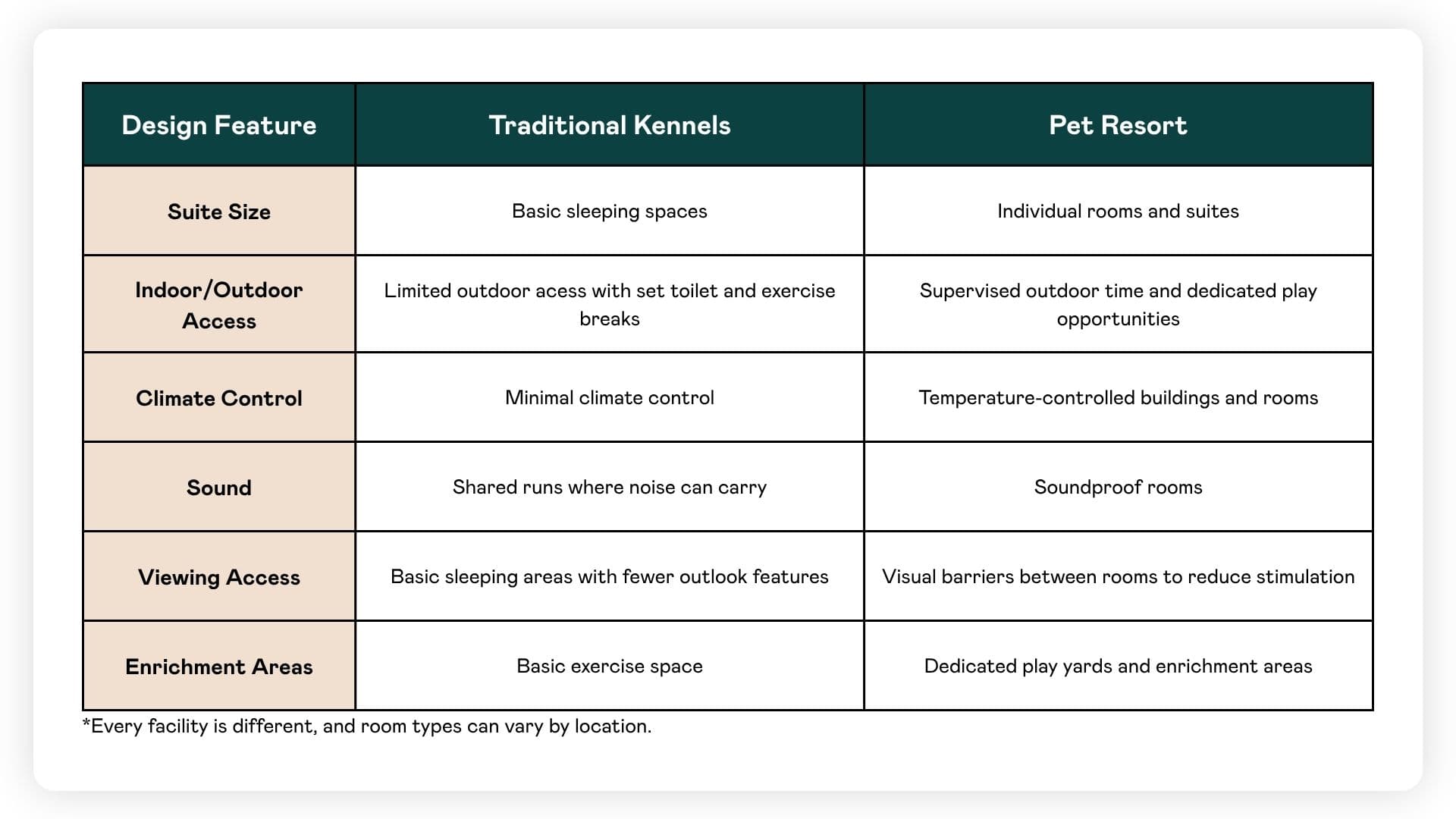
At Kip, the rooms, yards and rest areas all have a pawpose. Room types and features vary by location, but most Kip resorts have private room options, dedicated play areas and quiet rest spaces. Some even have pool yards for dogs who like to make a splash!
Daily routine differences
A traditional day at a dog kennel is usually built around the basics: breakfast, toilet breaks, cleaning, exercise, dinner and plenty of time spent in the room. Safe, simple, sorted.
A modern dog boarding day has a bit more rhythm. Pups move through play, supervised social time, enrichment, rest, meals, toilet breaks and one-on-one care.
Behavioural research supports the value of structure, enrichment and regular human interaction in dog care environments. In plain terms, dogs do better when their day gives them something to do, somewhere to settle and people who know when to dial the energy up or down.
Sample Kip-style boarding day
| Time | Activity |
|---|---|
| Morning | Wake up, welfare check, meds and morning feed |
| Mid-morning | Morning rest after eating |
| Late morning | Outdoor playtime |
| Midday | Midday feed (and meds if needed) |
| Afternoon | Extras and additional play times |
| Late Afternoon | Afternoon feeds (and meds if needed) |
| Evening | Afternoon welfare checks |
| Night | Close and sleep |
At Kip, a dog boarding day is built around the pawfect balance of snoozies and zoomies. Doggos get time to play, sniff, socialise and recharge, with trained carers guiding the pace.
Staffing, supervision and training
A boarding stay is only as good as the humans running the dog show. In a traditional dog kennel, the team may be moving through a practical care list: meals, cleaning, toilet breaks, bedding, checks, repeat. In a modern dog boarding facility, staff are usually more woven into the day, guiding play, managing groups, reading body language, setting up enrichment and spotting when a pup needs a pause from all the paws.
Staffing ratios can vary by state rules, facility layout, room setup and activity type, so one number never tells the whole tail. During active group play, resort-style facilities generally keep groups smaller, often around 8 to 15 dogs per staff member, depending on the dog size, temperament, yard set-up and play style.
Some facilities run behavioural assessments before a first stay. Others build a dog's profile through intake questions, arrival notes, observation and careful introductions once they’re in care. Either way, the point is simple: pups should be grouped and handled by people who understand temperament, confidence, play style and comfort around other dogs.
Handling style is another giveaway. Reward-based care, calm introductions and behaviour-aware supervision create a very different stay from compliance-based handling, where the goal is to simply make dogs obey. Good teams can read the room before the room starts barking. They know the difference between happy playing, rising stress and social awkwardness.
Staff credentials also help separate proper care from good intentions with a mop. Certificate-level animal care qualifications, ongoing behaviour training and experienced team leaders all point to a stronger dog boarding set-up.
Welfare and enrichment: what the research says
Dogs need more than a safe place to wait. They need activity, rest, social contact and enrichment built into the day. That is why resort-model facilities can offer measurable welfare benefits over basic confinement. The difference is not just the doggy decor; it's the daily care.
Enrichment activities, supervised social play, outdoor time, new environments and proper rest all give pups safe ways to use their brains and bodies. Research into dog boarding vs kennel environments has linked enrichment, exercise and human contact with lower cortisol and reduced stress-related behaviours such as barking, pacing and repetitive movement.
Communication with owners during a stay
In a more basic dog kennel setup, communication may be fairly simple: a phone update if requested, or a call if something important comes up. Resort-style boarding usually builds updates into the stay, with photos, videos, app notes or written updates to show you how your pup is eating, playing, resting and settling.
Aside from holiday-mode pupdates being ridiculously cute, this level of communication is also a useful quality signal. A facility that sends regular, specific updates shows it has systems, staff visibility and confidence in the care being delivered.
Cost and what you’re actually paying for
Dog boarding prices in Australia vary by location, room type, dog size, peak periods and what is included. As a rough guide:
- Simple kennel stays may sit around $30 to $70 per night
- Mid-tier boarding sits around $60 to $100
- Premium pet resorts cost around $90 to $150+
The difference usually comes down to the care. A lower nightly rate may cover accommodation, meals, cleaning and standard checks. A higher rate may include more spacious rooms, climate-controlled areas, higher staff involvement, supervised play, enrichment, rest routines and photo updates.
A $15 per night difference becomes about $105 over a week, so weigh that against the experience delivered. More comfort, more activity and more supervision mean more chance of your dog coming home happily tired instead of somewhat offended by your holiday choices.
How to tell which category a facility actually falls into
The price alone won’t tell you which category a facility falls into. Some simple kennels are well-run and caring. Some expensive stays may still offer a fairly basic day. The real value is what your dog actually receives between check-in and pickup: the room, the routine, the staff, the enrichment and the confidence you feel while they are there.
Use these questions as your sniff test before booking:
- Is the room shared or individual?
- What does a typical day look like from breakfast to bedtime?
- How are dogs grouped for play, rest and enrichment?
- Do staff have formal training in animal care?
- Can you tour the facility before booking?
- Will you receive updates during the stay?
- What happens if your dog becomes stressed or unsettled?
A no-tour policy is worth some paws. There may be safety or scheduling reasons, but any dog care facility worth its dog biscuits should still offer clear visibility into where pups sleep, play and rest.
Group play needs a little homework first, too. If a facility places dogs into group settings without an assessment of their temperament, confidence and play style, that’s a red flag no matter how high the price tag is.
Visit a Kip pet resort near you
Ready to make boarding feel better? Find your nearest Kip and see what resort-style dog boarding looks like up close. Every new dog stay starts with getting to know your pup’s needs, routine and daily quirks so our furrmidable team can help shape a stay that’s five-paws all the way.
Frequently Asked Questions
What’s the difference between a dog hotel and a kennel?
The difference between a dog hotel and a dog kennel comes down to the facility design and the care model. A kennel may offer a simple, safe stay with meals, rest and basic care. A dog hotel or pet resort usually adds comfier rooms, dedicated play spaces, structured routines, daily enrichment, supervised social time and parent pupdates.
Are dogs stressed in boarding?
Dogs can be stressed in boarding, especially if they are new to staying away from home. A good dog boarding facility helps reduce stress through routine, rest, enrichment, gentle handling and trained staff who can spot when a pup needs a little love.
How are dogs supervised overnight at boarding?
Dogs are supervised overnight during dog boarding with secure sleeping areas, evening settling routines and overnight safety checks. Every facility runs differently, so it’s worth confirming whether staff stay on site, how often dogs are checked and what happens if a pup needs help during prime snoring hours.
What should I look for in a dog boarding facility?
Look for a dog boarding facility with clean rooms, clear routines, trained staff, safe play spaces, rest time, enrichment and regular updates. A good facility should be able to explain how dogs are grouped, supervised and cared for. Bonus points for tours, transparency and zero “everyone in, good luck” energy.
Is boarding more expensive than a kennel?
Dog boarding can be more expensive than a kennel when it includes resort-style features. Price alone doesn’t tell the whole story. Compare what your dog actually gets each day from the room to the routine.