How will they cope? What will they eat? Will they spend the whole time hiding? Will they somehow know you’re living it up poolside while they’re holed up in their temporary digs? Cat boarding can come with a side bowl of serious guilt and can send even the most seasoned owners into a little cat-astrophising. The concerns are endless, especially if it’s your cat’s first stay! You’re likely left with that nagging thought: what happens once the carrier disappears through the door?
There’s no need to get your fur all ruffled, though. In a well-run cattery, cats have their own private accommodation, regular meals and litter care, places to hide and perch, and a calm setup designed around feline welfare. Most cats need a little time to take stock, but any initial “what is happening?” meows often mellow into very contented purrs within 24–48 hours.
A little paw-spective goes a long way towards settling the nerves on both sides of the carrier. So, before holiday mode kicks in, here’s what to expect from cat boarding and what to look for when choosing the right cattery.
What to expect from a modern cat boarding stay
Before you hand over your furry friend, it pays to know what you’re handing them over to. A quality cat boarding stay should cover these everyday essentials:
Private accommodation
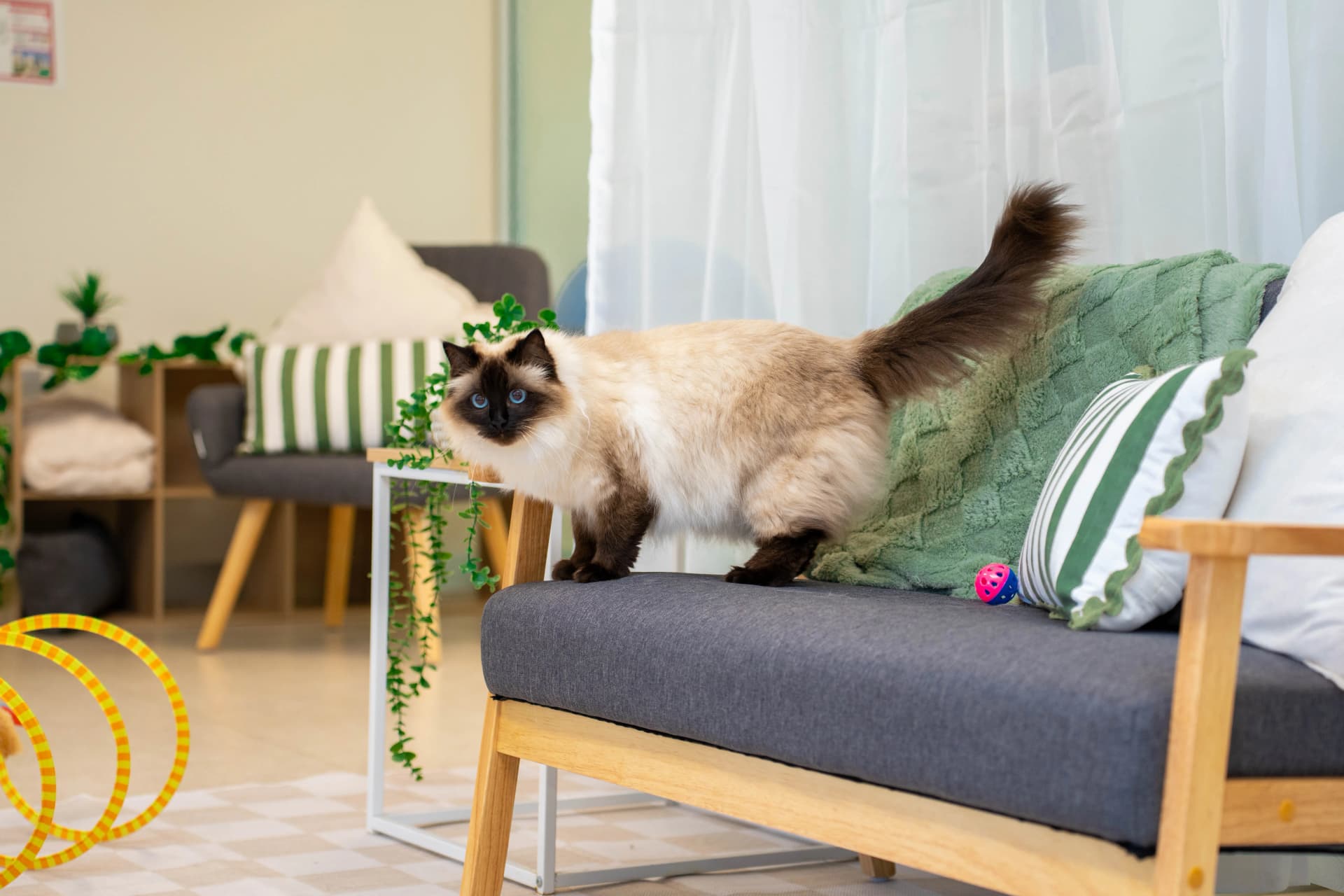
Your cat should spend their stay in private accommodation that gives them a few options on how to use the space. Depending on the cattery, that might mean taller accommodation with climbing room, or wider cubicles with shelves and comfy nooks. Either way, they should be able to perch up high, curl up somewhere cushy or tuck themselves away for a little downtime.
Regular meals
Feeding is an anchor of the boarding routine. At Kip, Royal Canin kibble is included in the daily cat boarding rate, with meals served on a regular schedule. Cats with a preferred diet can typically bring food from home for an additional fee, which is handy for picky eaters, sensitive stomachs, or any cats particularly committed to their usual menu.
Fresh litter
Cats appreciate a tidy bathroom situation, so litter care is naturally a key part of the regular daily offering. Trays should be checked, cleaned and refreshed throughout the day so your kitty’s castle stays comfy.
Optional interaction
Some guests warm up quickly to pats and attention. Others prefer a slower introduction and a little more observation time. A good cattery will follow those cues and let each cat settle into contact in their own way.
Health and wellbeing checks
Eating, drinking, toileting, grooming and sleep are all useful clues to how your cat is going. Experienced staff keep tabs on those little day-to-day changes so they can spot when something feels off.
For cats new to the boarding scene, the first day or two can be an adjustment. Hiding, eating less or grooming less can all crop up while they work out the new smells, sounds and routines. Nobody likes being bundled into a carrier and whisked off to an unfamiliar place, least of all a cat who has already filed several formal complaints about the carrier. A little preparation can help make the transition easier, so check how to prepare your cat for boarding before check-in day.
For many, those early stand-offs soon soften into eating, snoozing and settling into the daily groove. Cats who have boarded before may settle sooner because the whole routine feels a little less purr-plexing.
One thing worth ticking off well before check-in is your kitty’s vaccinations. Reputable Australian catteries require a current F3 vaccination, and many may ask for it to be completed at least 7–14 days before a first stay.
How to choose the right cattery
The right cattery should stand up to a little scratch test. Have a look around, ask a few informed questions and see how well they can cover the essentials.
Cat-only spaces
Look for dedicated cat areas, or genuine separation from dogs including sight and sound. Cats settle better when their surroundings feel calm, contained and feline-forward.
Private accommodation
Every cat should have their own space to perch, snooze, stretch and retreat. Ask to see the setup before you book so you know exactly what your kitty is checking into.
A clear vaccination policy
No fuzzy details here. A reputable cat boarding facility should clearly state its vaccination requirements, including a current F3 and when it needs to be completed before check-in.
Cat people
Ask who’ll be caring for your cat and what cat-specific experience or training they have. The right people should understand feline body language, stress signals and behavioural changes.
Handling that follows the cat’s lead
Some cats are happy for pats. Others need a little more time before they’re ready to socialise. Ask how staff approach shy, nervous or less hands-on cats and whether the interaction is adjusted to suit the individual guest.
Updates during the stay
Ask how the cattery keeps you updated during the day. Some facilities send photos or updates when they can, while others may have a different check-in system.
Take a pre-stay peek
Check whether the cat boarding facility welcomes visitors before booking. A quick look around can tell you plenty about the accommodation, cleanliness and setup, and lets you ask any last questions before check-in day.
Emergency vet plan
Find out what happens if your VIP becomes unwell during their stay. A good cattery should have a clear process for contacting you, accessing veterinary care and acting quickly if needed.
Book cat boarding at Kip
Ready to trade a little cat-astrophising for a lot more confidence? Kip cat boarding stays include private accommodation, calm handling and plenty of space for your kitty to have a furr-st class experience. A current F3 vaccination is required before check-in so that every guest remains safe and well.
Find Kip cat boarding near me and book their stay.