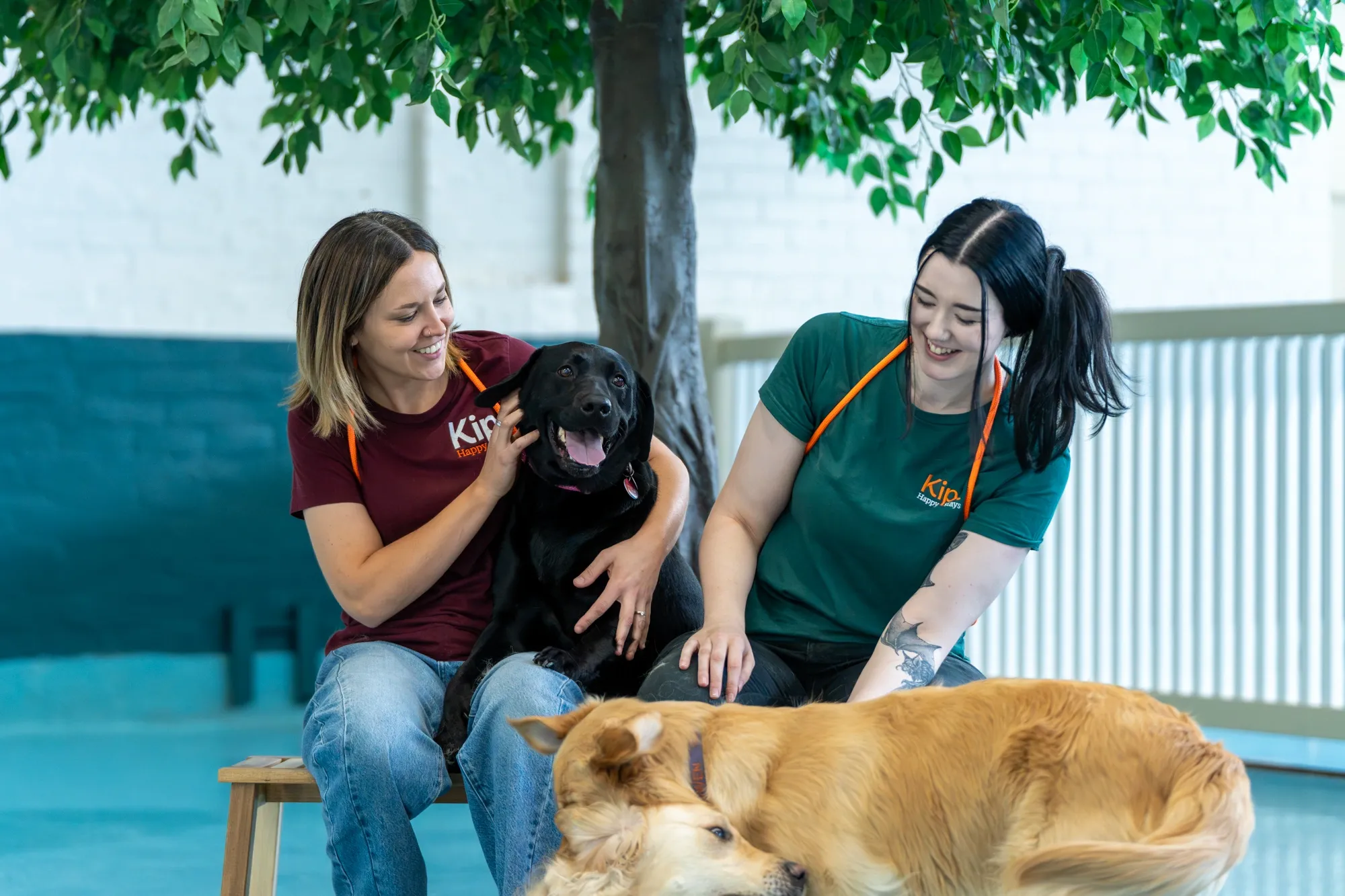
The benefits of dog daycare can seem pretty compelling when your pup is conducting zoomies through your 11 am video call, redesigning the couch or greeting you in the evening with the energy of someone whose day is only just getting started.
So, is dog daycare actually good for them? For the right dog, a well-run daycare can provide valuable social contact, physical activity, mental stimulation and a steady rhythm of play, pause and recharge. Research supports these building blocks of canine wellbeing, particularly when activities are supervised, suited to the individual dog and balanced with proper downtime.
Dog daycare should never be an all-day floof-led free-for-all, and it won’t suit every personality, age or health need. Here, we’re putting the generic benefit list in the doghouse and looking at what the evidence supports, which dogs may benefit and when another type of care could be the better call.
The four benefits the research supports
- Structured socialisation can build useful dog-to-dog skills.
For dogs who enjoy canine company, well-managed group play gives them a chance to practice the finer points of dog society: greeting politely, reading the room, taking a breather and working out who likes chasey and who would rather supervise from the sidelines.
The American Veterinary Society of Animal Behavior identifies safe, positive exposure to other animals, people and environments as an important part of behavioural development, particularly during puppyhood, while warning against experiences that cause fear, withdrawal or overstimulation.
The key words here are safe and positive. A supervised group of well-matched dogs is very different from opening the gate and hoping everyone can sort out the seating plan. Assessments, compatible playgroups, trained supervision and regular rotations help keep social time constructive and suitable to each pup.
- Daycare can replace a long stretch alone with activity and company.
Dogs left alone for extended periods may bark, howl, pace, toilet indoors or redecorate a cushion from the inside out. Research into separation-related problems identifies vocalisation, destructive behaviour and inappropriate elimination among the behaviours dogs may display when left alone, while broader studies of canine enrichment associate social contact and engaging activities with greater relaxation and fewer abnormal or stress-related behaviours.
Despite the many benefits of dog daycare, it isn't a treatment for clinical separation anxiety, and one or two visits cannot promise the miraculous survival of every sofa cushion. For a suitable dog, though, it can turn selected work days into something far more pawsitive. Play, human interaction, rest and a changing environment replace hours of waiting for the key in the front door.
- A busy brain gets a workout.
A good daycare day engages more than just four legs. Pups encounter new scents, spaces, activities, handlers and social information, all of which ask them to observe, respond and make choices and put that excellent nose to work.
RSPCA Australia describes enrichment as an important source of mental stimulation, physical exercise and emotional fulfilment. Its dog-training guidance also notes that mentally engaging activities allow dogs to think, solve problems and practice natural behaviours. That’s a lot more for a busy dog brain to chew on than one evening lap of the block.
- Planned rest helps dogs find their off switch.
A dog daycare day should not consist of dawn till dusk zoomies and water bowl pit-stops. Pups need the chance to put their paws up too. Research shows that dogs sleep in several bouts across the day and night, and that sleep helps them process and retain what they have learned.
The famous post-daycare flop should come from a day with a healthy rhythm, not hours of wall-to-wall woof. Thoughtful group rotations, calm spaces and scheduled rest let pups recharge between sniffing, socialising and spirited dashes to greet their favourite playmate.
When daycare isn't the right fit
Some pups hear “daycare” and mentally pack their tennis ball. Others would rather stay well clear of the welcome committee. Both are completely valid.
Dog daycare can look different for every dog, and being shy, older or less mobile doesn’t automatically mean it’s off the cards. Some pups arrive tail-wag first, ready to make new friends, while others need a little more time to find their feet. Shy dogs can grow in confidence with the right environment and routine, and plenty of older pups enjoy daycare, too.
Kip looks at each dog’s personality, behaviour and individual needs to work out what type of care will suit them best.
Daycare may not be the best fit for dogs who:
- Repeatedly show that they feel overwhelmed or distressed by the daycare environment, even with time to settle in.
- Struggle to relax around other dogs or unfamiliar people and aren’t comfortable participating in the daycare routine.
- Are recovering from surgery, carrying an infectious illness or needing close medical care.
- Repeatedly show signs of stress after visits, including a tucked tail, lip licking, avoidance or unusual clinginess.
A quiet first visit doesn’t necessarily mean your dog isn’t a daycare dog. Some pups need a little extra time, patience and the right introduction before they feel at home. Our team can give them the time they need to settle in and build confidence at their own pace, while keeping an eye on how they’re responding to the experience. If those signs of stress continue, daycare may simply not be the happiest environment for that particular pup.
For dogs who prefer fewer fur friends in their paw-sonal space, training, in-home care, or a calmer boarding routine may be a better match.
Book daycare at Kip
Ready for more wag in the weekday? Kip follows the same structured model the research supports for the benefits of dog daycare, beginning with behavioural assessment before your pup joins the pawty.
Carefully matched groups, supervised play rotations and scheduled rest keep the day moving at the right pace, with free pupdates giving you a window into the sniffing, socialising and flop-spot selection along the way. Find your nearest Kip daycare today.