All-day play at dog daycare can sound like a pup’s paradise, right up until that pup comes home wired, tired and still pacing after dinner. That’s why structured play is usually better than free play in daycare settings: most dogs do best with supervised groups, behavioural matching, and proper rest periods between play.
Across the Australian dog daycare industry, “structured play” and “free play” can mean different things depending on the facility. One may be talking about matched groups and scheduled rest. Another may simply mean dogs are together in one big social soup, which can get ruff pretty quickly.
Before pet parents book, it pays to sniff out the details. Let’s look at the two models, what the evidence says about woofer welfare, and how to tell whether a facility is running a balanced doggy daycare or barking up the wrong tree.
The two models explained
Think of doggy daycare a little like a playgroup with paws. A good day is not just "open the gate and let the zoomies begin.” Staff need to read body language, ready energy, shift the pace and know when pups need a breather. Structured play has that rhythm. Free play can work in the right setting, but when it becomes one long, mixed group romp, things can get hairy quickly.
| Model | Group Size | Supervision Style | Rest Schedule | Behavioural Matching | Outcome |
|---|---|---|---|---|---|
| Structured Play | Smaller, managed groups | Active supervision, with staff guiding play, reading body language and stepping in early | Scheduled rest periods between play and enrichment | Dogs matched by size, temperament, confidence and energy level | Lower risk of over-arousal, conflict and fatigue when managed well |
| Free Play | Often larger, mixed groups | More passive supervision, with staff usually stepping in after behaviour escalates | Minimal or informal rest sessions | Little or not matching beyond broad size | Higher risk of over-arousal, stress, injury or dogs practising pushy behaviours |
Structured play is a playgroup with a plan. Dogs are placed into smaller groups based on size, temperament, confidence, energy levels and play style. A young Kelpie who wants to chase, bounce and keep the paw patrol moving may need a very different group from a senior Cavoodle who prefers a solo sniff and a slower pace. That matching is especially important for dogs who are new to daycare, still building confidence or learning how to read other pups without getting overwhelmed.
In structured dog daycare, staff are actively involved. They watch body language, guide the group, redirect play when it gets too full-on and step in early when a pup needs a breather. This is where structured play earns its doggy biscuits. Dogs are rotated through play, rest and enrichment across the day, so they get the fun of social time without being asked to stay switched on for hours. It’s play, with a paws button.
Free play is usually a looser model. Dogs may spend longer stretches together in larger or more mixed groups, with less behavioural matching and fewer scheduled rest breaks. In small, calm, well-supervised groups, this can suit some dogs. But when free play turns into all-day play with mixed sizes, mixed energy levels and no clear rest breaks, the paw-ty can get wild.
What the evidence says about welfare outcomes
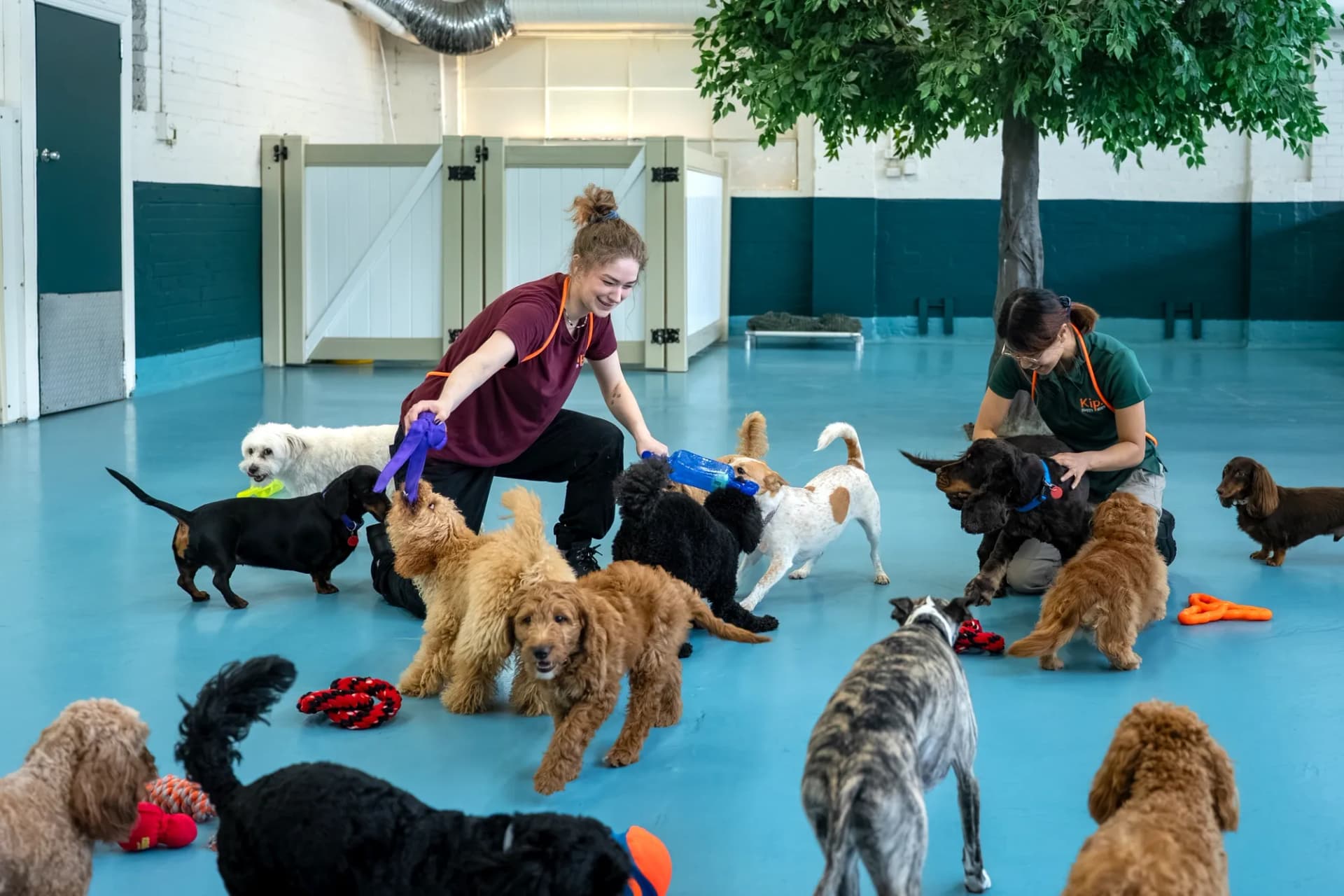
Good dog handlers see it every day: dog daycare socialisation works best with pups that have the right playmates, watchful humans and proper chances to rest. Social time can be a fetchingly good time for dogs, but all-day play with mixed groups can send some pooches from happy-tired into wired-tired.
That wired-tired state can trick pet parents because it looks, at first, like daycare did its job. Your pup is exhausted, so surely they had the best day ever. But a good daycare should leave dogs satisfied, not frazzled. Look for the difference between a loose, sleepy pooch who settles easily at home, and one who crashes hard, pops back up and keeps pacing like their battery is still flashing red.
The Australian Veterinary Association says boarding and dog daycare facilities should support a dog’s health, welfare and natural behaviour, with staff who understand species-specific behaviour and communication signals. Behavioural research into dogs in boarding and group settings points in the same direction.
Dogs can enjoy social time, but welfare depends on more than whether dogs are playing. Stress and over-arousal can show up as pacing, barking, stiff body language, scanning the room, avoiding other dogs or coming home tired in the body but still switched on in the brain.
That is why structured rotation has such a useful role in dog daycare. Adult dogs commonly need around 12–14 hours of sleep or rest in a 24-hour period, with puppies and older dogs often needing more. When a daycare day moves between play, enrichment and rest, pups get the fun of social time with built-in chances to reset.
Those pauses also help staff read the yard properly. If a dog is getting too pushy, hanging back, struggling to settle or giving another pooch the “back up, buddy” look, the team can adjust early. The earlier those small adjustments happen, the less likely a pup is to practice pushy play or carry stress into the rest of the day.
Structured play takes more work, which is the honest catch. It needs trained staff, behaviour smarts, individual dog knowledge and a schedule that goes beyond “open the gate and cross your paws”. Free play can be simpler to run, especially with larger groups, but simpler for the facility does not always mean better for the dog.
Kip follows the structured play model, with behavioural matching, group rotation and rest periods built into every dog daycare day.
How to tell what your facility is really running
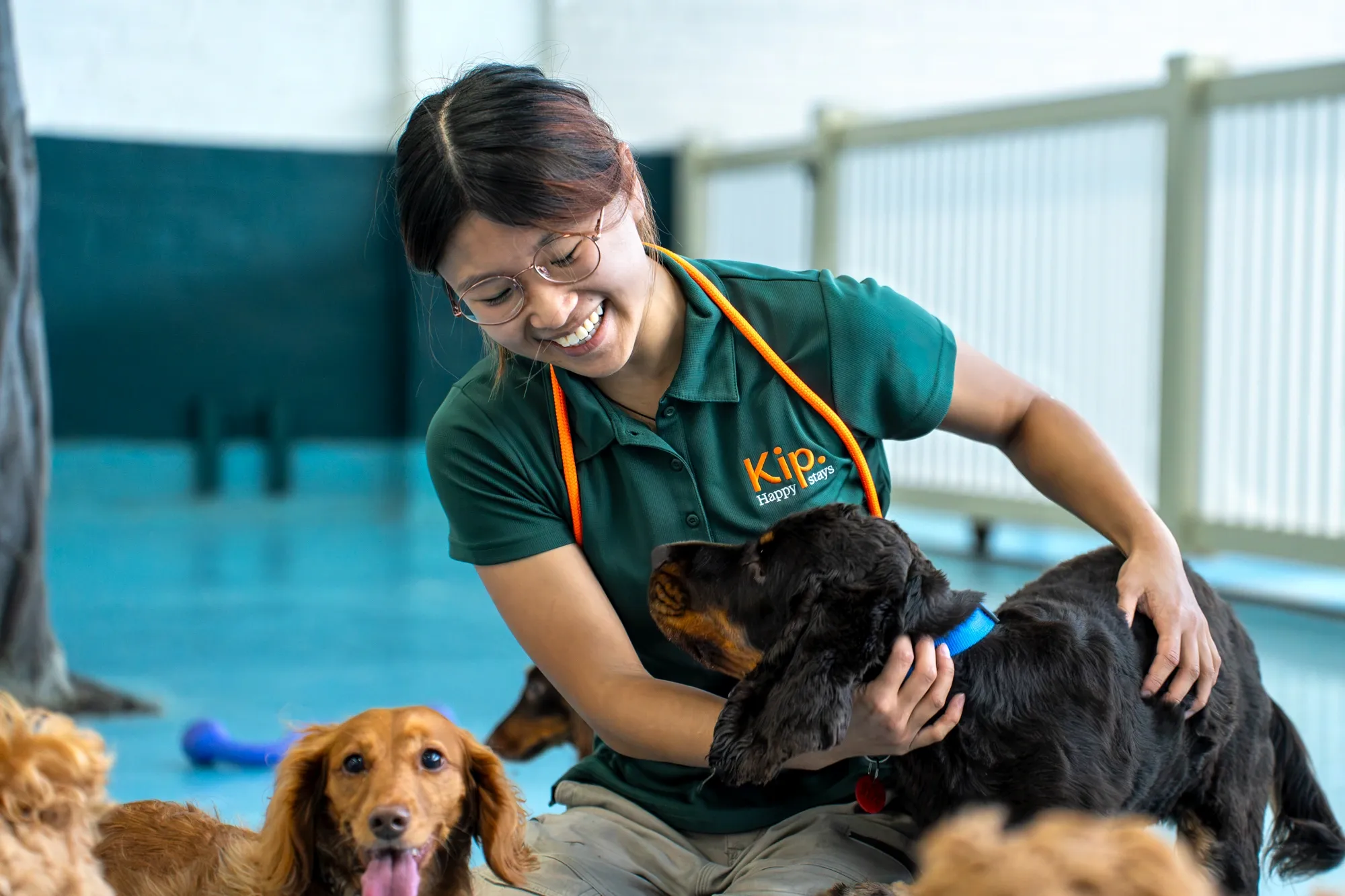
A dog daycare website can say all the right things, but the proof is in the playroom. Before booking, pet parents can ask a few simple questions to sniff out whether a facility is running structured play, free play or something in between
- What is your staff-to-dog ratio during active play?
A good answer should be clear and specific. The ratio tells you how closely staff can watch body language, manage rising energy and step in before things get barky.
- How are dogs matched into groups?
Listen for more than just size. Good group matching should consider temperament, confidence, age, energy level and play style.
- How often do dogs rotate between play and rest?
A structured facility should be able to explain how the day is broken down. Pups should have proper rest periods between play sessions, rather than being left to play until they run out of puff. A clear schedule also shows that rest is planned, not just squeezed in once everyone starts losing their manners.
- What happens if my dog doesn’t want to play?
Some pups love group play. Others prefer a gentler pace. A good daycare should have a plan for pups who need space or a slower day.
- Can I see a typical daily schedule?
The schedule should show you when dogs play, rest, toilet, eat, and move between spaces. If the whole day sounds like one long freeform play session, it may not be the most comfy set-up for your precious pooch.
- How do staff manage over-arousal?
Listen for answers around early intervention, redirection, calm handling and rest breaks. Staff should know how to spot rising energy before barking, mounting and chasing take over.
- How are new dogs introduced?
New dogs should be introduced carefully, with staff watching how they respond to the space, people, and the group. Slow introductions help dogs settle and give staff a better read on what kind of day will suit them.
The best answers will feel practical, specific and easy to picture. If a facility can walk you through the day from playgroups to rest breaks, pet parents can book with more confidence.
Book daycare at Kip
For pet parents looking for dog daycare with more than all-day zoomies, Kip gives pups play, enrichment and rest in a better rhythm. Every dog starts with a behavioural assessment so the team can get the right idea of how they play, what they enjoy and the kind of pup posse that will suit them best.
It’s big tail wags, good playmates and a day that gives your dog the space to play with the oppawtunity to pause. Find your nearest Kip to sniff out dog daycare that looks after your pup from the first hello to home-time happiness.
Frequently Asked Questions
Is free play bad for dogs?
Free play is not automatically bad for dogs. In small, well-matched groups with active supervision, plenty of pups can enjoy loose social play and come home happy-tired.
The risks start to climb when free play means large mixed groups, long stretches without rest and staff stepping in only once things get too full-on. At that scale, some dogs can become overstimulated, stressed or pushed into play that doesn’t suit their size, confidence or energy.
How long should a dog play at daycare?
Dogs shouldn’t play nonstop at dog daycare. Adult dogs need around 12–14 hours of sleep or rest across 24 hours, with puppies and older pooches often needing more.
That’s why a good daycare day usually works best with a mix of play, enrichment and rest. Pups still get all the furry fun of the paw party, but they also get proper breaks to reset before heading back into the group.
What if my dog doesn't like group play?
If your dog doesn’t enjoy group play, that will define what kind of day suits them best. At Kip, dogs are assessed before joining dog daycare, so the team can understand their confidence, temperament and play style. The shyer types can be placed into smaller, quieter groups or offered one-on-one time. Traditional daycare play is not the dream for every dog, and a good facility should help pet parents find the setup that feels right for their VIP.